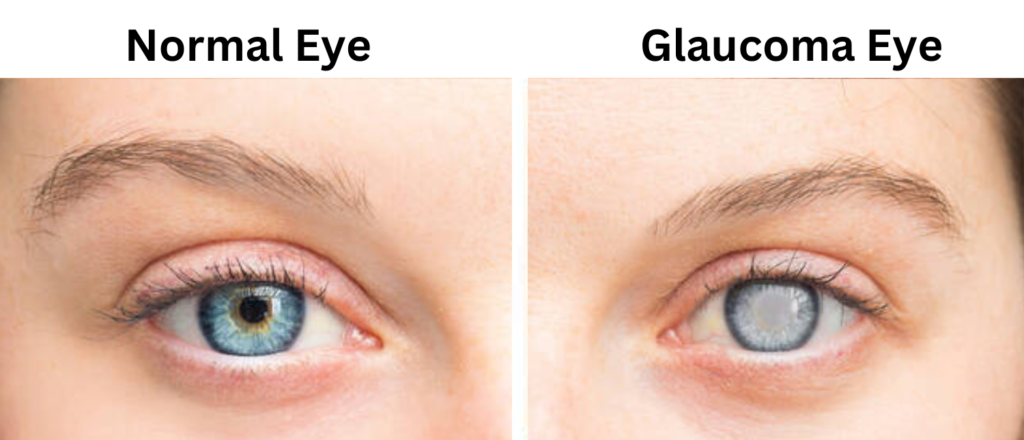
What is Glaucoma?
Millions of tiny fibres send messages to your brain that help you see. These tiny fibres or nerves are known as optic nerves. Increased pressure in the eye can damage these optic nerves, causing vision loss. This is known as Glaucoma.
Glaucoma is known as The Silent Thief of Sight. Once the symptoms start, it takes years for a person to lose their sight completely. Initially, you may not even notice the symptoms of glaucoma. However, as time passes and the disease progresses, you will notice that you are unable to see clearly (in the case of open-angle glaucoma, you may not feel any pain). However, with acute angle-closure glaucoma, pain behind the eyes and head may occur. If it is not treated on time, it can lead to irreversible blindness.
Causes of Glaucoma
The main cause of Glaucoma is increased eye pressure. For an eye to function normally, the eye pressure or the intraocular pressure (IOP) must be between 10mmHg and 20mmHg (millimetres of Mercury). The optic nerve starts getting damaged when this pressure goes beyond the acceptable level. However, glaucoma can still occur even within this range, as seen in normal-tension glaucoma. If you do not get treated, the pressure will keep rising, thus continuously damaging the optic nerve and causing Glaucoma vision.
What you need to remember is that certain factors can lead to glaucoma. These include:
Age: As you age, your body undergoes changes, including your eyes. This may cause thickening of the lens, any natural changes that happen, or decreased drainage from the eyes. All this can eventually lead to glaucoma.
Family History: If you have a family history of Glaucoma, the chances of you also being diagnosed with it is high.
Medical Conditions: Certain medical conditions like diabetes, high blood pressure, any eye disease etc, are known to increase the IOP. This can slowly cause glaucoma and, eventually, loss of vision.
Medicines: Certain medications, such as long-term use of steroids, are known to cause glaucoma
TRUSTED USER
0
k
POSITIVE RATING
0
%
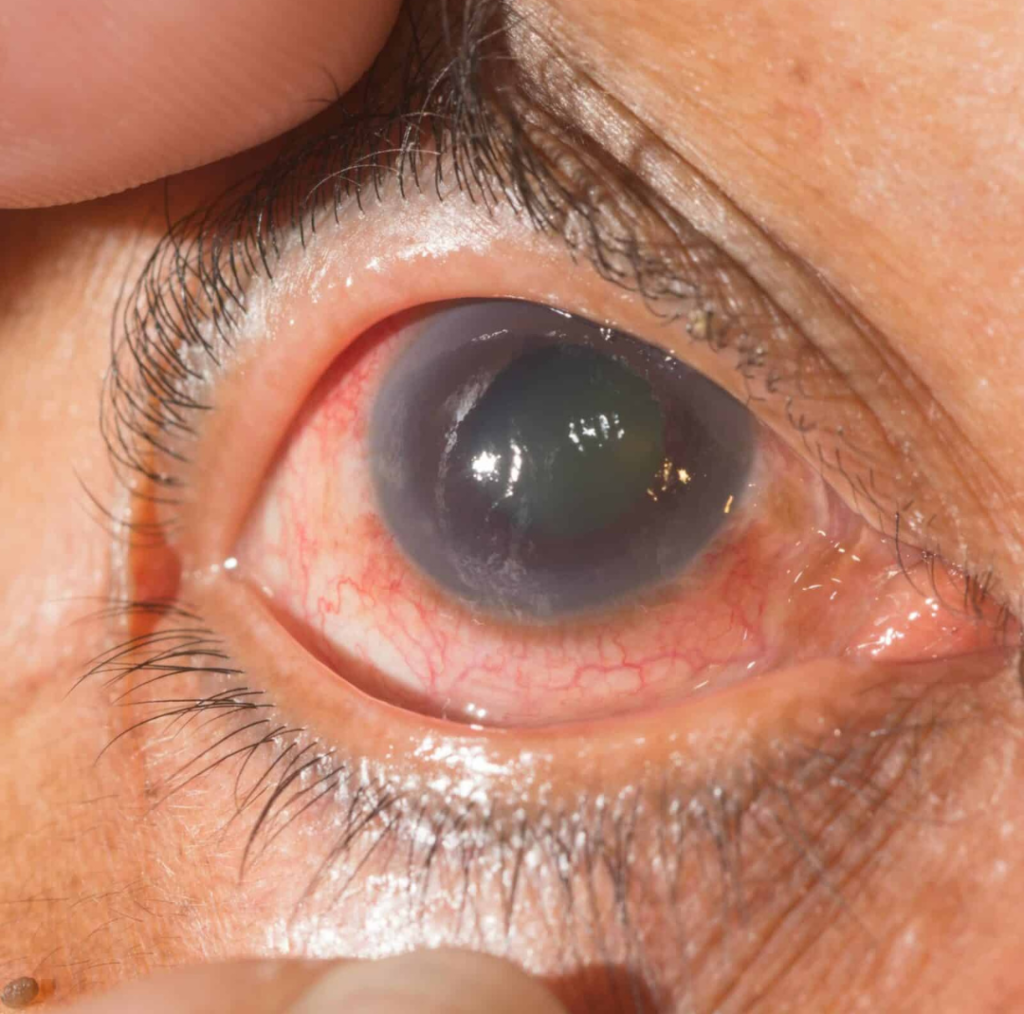
Glaucoma Symptoms
Each individual who gets diagnosed with glaucoma displays a variety of symptoms. However, each individual may not exhibit the same glaucoma symptoms. However, these are the most common symptoms of Glaucoma:
Pain in the eyes: One of the first symptoms to look for is pain or irritation in the eye. It can be discomfort, redness, dryness, etc.
Constant Headaches: Certain individuals may suffer constant headaches, which may be around the eyes or the temples. If you get constant headaches, you should check the IOP to see if there is a possibility of an eye disease like glaucoma.
Hazy Vision: If your vision is blurred and there is a gradual loss of peripheral vision, you may have glaucoma.
Halos around light: Certain patients diagnosed with glaucoma see halos around light. If you face the same symptom, there is a chance of your eye being affected by glaucoma.
Vomiting: Increased IOP can cause nausea and vomiting. This is particularly common in acute angle-closure glaucoma.
These are just some of the common symptoms, and they vary according to the type of glaucoma you are diagnosed with.
Types of Glaucoma
-
Open-angle glaucoma
When the drainage angle that is between the iris and the cornea remains open, while other parts do not drain eye fluid properly, it can cause an increase in pressure in the eye. This can lead to open-angle glaucoma. It generally starts as patchy spots in your peripheral vision and slowly spreads. The symptoms set in late, and as the disease progresses, it becomes difficult to see through your central vision.
-
Close angle-closure glaucoma
A sudden increase in the pressure of the eye or the IOP causes acute angle-closure glaucoma. This happens when the space between the iris and the cornea moves close to each other, and it happens suddenly.
-
Normal-tension Glaucoma
This type of glaucoma occurs when the optic nerve is damaged even though the IOP remains within the normal range.
-
Congenital Glaucoma
This type of glaucoma is present immediately after birth or develops within the early months or years. It can happen if there is any abnormal development of the eye’s drainage system.
Glaucoma Diagnosis
Glaucoma vision can be diagnosed after a comprehensive eye test. If you show signs of glaucoma, your ophthalmologist will consult a series of tests to understand the type of glaucoma. These tests include:
Eye Examination through dilation: This test allows the doctor to check the retina and the optic nerve.
Tonometry: This test will be done to check the intraocular pressure or eye pressure.
Gonioscopy: To understand the angle between the iris and the cornea, the gonioscopy test is done
Visual Field Test: This test is done to check peripheral vision and to see if there are any blind stops.
Corneal pachymetry Test: Your doctor will conduct the corneal pachymetry test to check the corneal thickness.
Glaucoma Treatment Options
At JeevanSparsh, you get multiple options for getting your glaucoma treated. We have a proficient team of doctors to aid you through the process.
Non-Surgical Treatment
-
Anti- Glaucoma Drops
These drops help reduce the IOP and can be used daily. They can also slow the progression of glaucoma
-
Laser trabeculoplasty
This glaucoma laser surgery targets the blocked drain and increases drainage while reducing pressure
-
Micropulse Transscleral Cyclophotocoagulation (MP-TSCPC)
This treatment uses a laser to reduce eye pressure. It is often used in advanced cases where other treatments are not effective
Surgical Treatment
-
Trabeculectomy
If the patient is suffering from advanced glaucoma, this method of glaucoma operation relieves the pressure by creating a small incision or opening near the eye
-
Glaucoma Drainage Devices
These devices are inserted into the eye to redirect the excessive eye fluid caused by high pressure. Once inserted, the fluid is drained to an external outlet, which helps normalise the eye pressure. The recovery time is about 4-6 weeks
-
iStent Inject
A small stent is inserted to lower eye pressure. It is minimally invasive, and recovery time is relatively short
What We Do
Features Providers and Patients Love
FAQs on Cataract Treatment
Can glaucoma affect both eyes?
Glaucoma can affect both your eyes. However, the progression may differ and does not need to be simultaneous.
Can glaucoma be cured?
Glaucoma is a chronic condition that cannot be cured. However, with proper medication and treatment, you can manage the symptoms with medication and glaucoma treatment.
Can I prevent glaucoma by leading a healthy lifestyle?
A healthy lifestyle can help build immunity and improve ocular health. However, it is not guaranteed that it can be completely avoided, especially if you have other ailments like diabetes or a genetic disposition to glaucoma.
Does Jeevan Sparsh Eye Hospital accept insurance for glaucoma treatment?
As a Super Speciality Eye Hospital, Jeevan Sparsh does accept insurance for glaucoma treatment.
Is glaucoma surgery covered by insurance?
Glaucoma surgery is covered by insurance.
Are there any restrictions after Glaucoma surgery?
Post-operative care will be discussed with the patient after the glaucoma treatment. Patients should avoid rubbing or touching their eyes, avoid strenuous activity and avoid getting into water.
How long does it take to recover from glaucoma surgery?
Recovery time depends on the type of treatment. Non-surgical treatments take a few days to recover. However, surgical treatments can take about 2-6 weeks, depending on the type of surgery.
Is daycare facility available for glaucoma surgery at Jeevan Sparsh Eye Hospital?
A daycare facility is available for glaucoma surgery at Jeevan Sparsh Eye Hospital
How long does a typical glaucoma surgery take at Jeevan Sparsh Eye Hospital?
The duration of surgery depends on the type of glaucoma, the type of surgery and the complications associated with the procedure. A minimally invasive surgery would take about an hour or so.
How often do I need to visitJeevan Sparsh Eye Hospital for glaucoma treatment?
If you have been diagnosed with glaucoma, you will need to schedule follow-up visits as per the doctors’ instructions. Getting your eye checked every six months can help track the progression of glaucoma.
Can young people have Glaucoma?
Young people can be diagnosed with glaucoma if there is a genetic factor involved, any medical issue or eye trauma or injury.
Does Glaucoma surgery require anaesthesia?
Anaesthesia is administered to numb the eye. It can be local or general anaesthesia, depending on the type of treatment.
Don't let Glaucoma steal your Vision!
Glaucoma may be a silent thief, but it doesn’t have to rob you of your vision. By taking steps to prevent and manage this condition, you can protect your eyesight and continue to live a fulfilling life. Remember to schedule regular eye exams, take care of your health, and stay informed about glaucoma and its treatment options.