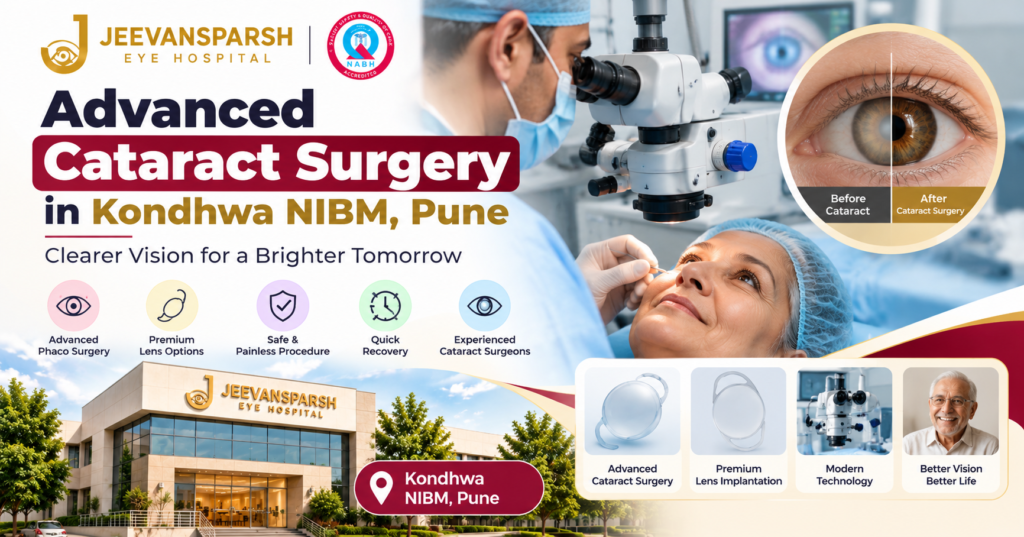
Advanced Cataract Surgery in Kondhwa NIBM, Pune – Symptoms, Treatment & Recovery
When everyday tasks like reading, driving at night, or recognizing faces become difficult, it’s easy to blame age but it could also be cataracts. If you’re considering cataract surgery Kondhwa NIBM, knowing the early symptoms, treatment options, and what to expect before and after surgery will help you make the right decision with confidence and protect your everyday vision.
What’s Actually Happening in the Eye
Behind your pupil is a small, naturally transparent lens that helps focus light onto the retina. Over time, the proteins in that lens begin to clump together, making it appear blurry, as if looking through a foggy window instead of clear glass. This is a cataract. Age is the most common cause, but diabetes, years of sun exposure, certain medications, or previous eye injury can also accelerate the process.
Because the fogging happens gradually, most people only realise how much they’ve adjusted to it once the surgery restores their vision and everything suddenly looks brighter and sharper than they’d forgotten it could be.
Signs Worth Paying Attention To
- Vision that feels cloudy, blurred, or dim, even with your glasses on
- Night driving becoming genuinely stressful because of glare from headlights
- Colours that seem washed out or slightly yellow-tinted
- Needing a new glasses prescription more often than before
- Seeing double out of just one eye
- Reading or recognising faces from across a room getting noticeably harder
If a couple of these sound familiar, it’s a good idea to get your eyes checked by a cataract surgeon in Kondhwa NIBM rather than assuming a stronger lens prescription will fix it. It won’t the clouding is inside the eye itself, not something glasses can correct.
How the Surgery Actually Works
The good news is that cataract surgery today looks nothing like it did a generation ago. Most surgeons now use phaco cataract surgery, short for phacoemulsification. In plain terms, the surgeon uses a tiny ultrasonic probe to break up the cloudy lens and gently remove it through a very small incision, then places a clear artificial lens in its place.
The incision is small enough that stitches usually aren’t needed, and the whole thing tends to be over in 10 to 20 minutes per eye. Patients are awake throughout, with the eye numbed rather than the whole body put under and most walk out saying it felt quicker and less stressful than they’d braced themselves for.
Standard Lens or Premium Lens Which One?
This is one decision worth thinking through carefully before surgery day, since it shapes how much you’ll depend on glasses afterward.
A standard monofocal lens gives you clear distance vision, but you’ll likely still reach for reading glasses. A premium cataract lens multifocal or extended-depth options is designed to give you usable vision at several distances, cutting down or removing the need for glasses altogether.
There’s no universally “better” choice here; it comes down to your lifestyle, whether you already have astigmatism, and how much you personally value being glasses-free. A good surgeon will talk this through with you rather than just picking one for you.
What Recovery Actually Feels Like
- Day 1 some grittiness, watery eyes, or sensitivity to light. Completely normal.
- First week this is usually when the “wow, everything’s brighter” moment happens.
- Weeks 2 to 4 vision keeps settling and sharpening as the eye finishes healing.
- Follow-ups your surgeon checks that the new lens has settled properly and healing is on track.
You’ll be asked to avoid rubbing the eye, skip heavy lifting for a bit, hold off on swimming, and use the prescribed eye drops as directed. None of it is complicated, but it does matter.
Picking the Right Hospital
Not every cataract hospital in Kondhwa NIBM offers the same level of care, so it’s worth asking a few direct questions before you commit: What equipment and lens options do they actually offer? How many cataract surgeries has the team performed? What happens if you need a follow-up visit outside regular hours? A clinic that answers these openly including honest cost differences between lens types is usually one you can trust with your eyes.
The Bottom Line
Cataracts are one of the most treatable causes of vision loss out there, and modern phaco techniques have made the process faster and far more comfortable than most people expect. If glare, blur, or fading colours have started creeping into your everyday life, getting an eye check isn’t overreacting, it’s the first real step toward seeing clearly again.
This article is meant for general information and isn’t a substitute for a proper medical consultation. Speak with a qualified ophthalmologist about what’s right for your eyes.