What is Squint?
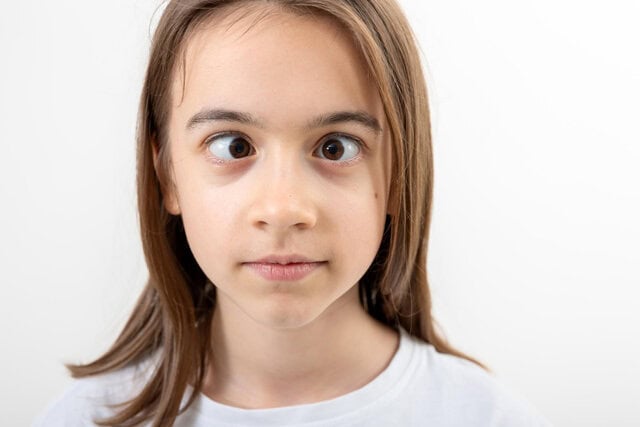
A squint, medically known as strabismus. It occurs when the eyes do not look in the same direction at the same time. Instead of focussing together, one eye may look straight ahead while the other turns inwards, outwards, upwards, or downwards. This misalignment can affect both vision and appearance. Squint can be present at birth, develop during childhood, or arise in adulthood due to certain health conditions or neurological changes.
For many, having squint eyes can be challenging, both in seeing clearly and feeling confident in social situations. The brain relies on both eyes working together to create a single, clear image. When a squint is present, the brain may struggle to combine these images, leading to double vision or entirely suppressing the image from one eye. This can develop into a “lazy eye” (amblyopia) in children.
Understanding what is squint and how it affects everyday life is a significant first step toward finding an effective treatment. With guidance from a specialist, there are ways to manage and treat this condition, helping individuals gain clearer vision and renewed confidence.
Types of Squint
Squint eyes come in several types. Each type is unique in how it affects eye alignment, and some individuals may experience multiple types due to complex neurological or muscle factors.
- Esotropia (Inward Turn): In esotropia, one eye turns inward, causing it to appear closer to the nose. This type is common in children and can make it seem as though they’re “cross-eyed.” Esotropia can affect one eye or alternate between both.
- Exotropia (Outward Turn): Exotropia is when one eye drifts outward, often appearing more prominent when looking into the distance. Individuals with exotropia may have difficulty with depth perception, making daily tasks feel off-balance.
- Hypertropia (Upward Turn): In this type, one eye turns upward while the other remains aligned. This misalignment may make it difficult to focus properly, leading to double vision or eye strain.
- Hypotropia (Downward Turn): The opposite of hypertropia, hypotropia is when one eye turns downward. This type can make everyday vision feel imbalanced as the brain struggles to fuse images from both eyes.
Learning about these types of squint helps identify how each impacts vision, allowing for tailored treatments that address specific alignment issues.
TRUSTED USER
0 k
POSITIVE RATING
0 %
What Causes a Squint Eye?
Squint eyes can develop due to a variety of causes. These range from genetics to issues with eye muscles or nerves. In some cases, a family history of squint increases the likelihood of developing the condition, though this isn’t always the case.
Another common cause lies in the muscles surrounding the eyes. These muscles must work in perfect harmony to keep both eyes focused on the same point. When there’s a weakness or imbalance in these muscles, one eye may start to drift. For instance, if one eye muscle pulls stronger than its counterpart, misalignment can occur, causing squint eyes.
In other cases, squint may result from nerve signals between the brain and eyes that aren’t working effectively. Certain conditions like cerebral palsy, Down syndrome, thyroid eye disease, or even an injury can impact these signals, disrupting eye coordination. Additionally, issues with the cornea can also affect eye alignment and lead to vision irregularities.
Understanding what causes a squint eye can make treatment more effective. Different causes respond best to specific methods, helping restore alignment and clarity.
Symptoms of Squint Eyes
The symptoms of squint eyes can vary, depending on the type and severity of the misalignment.
One of the most noticeable signs is that the eyes appear to look in different directions, with one eye focused straight ahead while the other may turn inward, outward, up, or down. This misalignment can be constant or might only occur occasionally, especially when feeling tired or stressed.
For many individuals, squint can cause double vision, as the brain struggles to combine images from both eyes into one clear picture. To cope, the brain may ignore the image from the misaligned eye. This can gradually lead to reduced vision in that eye—a condition known as amblyopia or “lazy eye.”
Other symptoms may include difficulty focussing on nearby objects, frequent eye strain, or headaches, especially after reading or doing close-up work.
Children with squint might tilt their heads to use their stronger eye, or close one eye in bright light to improve focus.
Diagnosis of Squint Eyes
Diagnosing squint eyes is a simple, non-invasive process conducted by an eye specialist. During an exam, the specialist will observe how each eye moves and whether both eyes are able to focus on a single point. They may ask the patient to look at a specific object and check how each eye responds.
In some cases, tests like a cover test or corneal light reflex test may be performed to evaluate eye alignment.
For children, the diagnosis may involve playful tests, where the child looks at colourful shapes or toys, allowing the specialist to monitor their eye movements without causing discomfort.
With a detailed diagnosis, the doctors at Nethradhama Super Specialty Eye Hospital can recommend the most suitable squint eye treatment options. This will ensure a clearer path toward better alignment and vision.
Squint Treatment
Squint eye treatment offers multiple options, depending on the type and severity of the squint. For children and adults with mild squint, non-surgical treatments like eye exercises, prism lenses, and glasses with special lenses can be effective. Exercises help strengthen eye muscles, encouraging both eyes to work together. For those with “lazy eye”, patching the stronger eye is effective in children, as it can boost vision in the weaker eye, allowing both eyes to better align.
If non-surgical methods aren’t enough, surgery may be considered. In squint surgery, the eye muscles are adjusted to improve alignment, helping both eyes to focus in the same direction. This procedure is straightforward, and recovery is often quick. However, in some cases, further follow-up treatments may be necessary for optimal alignment.
Seeking help at trusted institutions can ensure the best approach for each individual. With proper guidance, squint treatment brings not only visual improvement but also a renewed sense of confidence and clarity in daily life.
What We Do
Features Providers and Patients Love
Your child's vision deserves the best.
Take action today and secure expert diagnosis and treatment options with Jeevan Sparsh.